
Testing your blood sugar at home tells you how your food, activity and medications are working. In Canada, blood sugar is measured in millimoles per litre (mmol/L). If a website or meter shows numbers like 100 or 140, that's the American unit (mg/dL). Divide by 18 to get mmol/L.
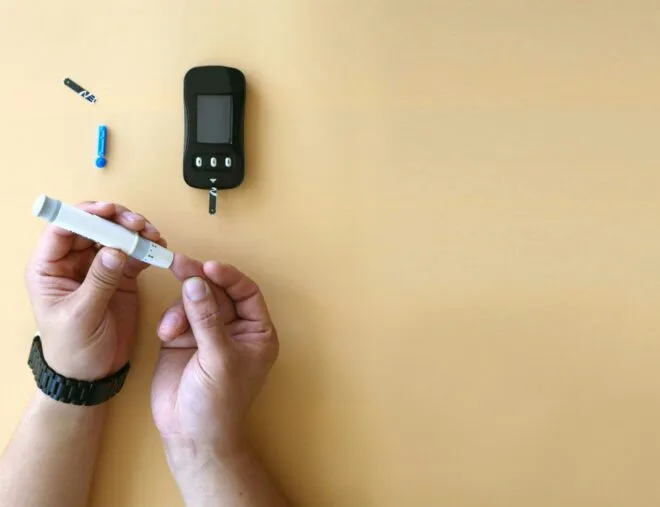
How to test with a meter
- Wash your hands with warm water and dry them well. Sugar on your fingers gives a false high.
- Put a new test strip in the meter.
- Use the lancing device on the side of a fingertip. It hurts less than the pad.
- Touch the drop of blood to the end of the strip.
- Write down or save the reading, with the time and whether it was before or after a meal.
What is a good reading?
For most adults living with diabetes, Diabetes Canada suggests:
| When | Target |
|---|---|
| Before meals (fasting) | 4.0 to 7.0 mmol/L |
| 2 hours after eating | 5.0 to 10.0 mmol/L |
| 2 hours after eating, if your A1C isn't at target | 5.0 to 8.0 mmol/L |
Your own targets may be different, especially for older adults, during pregnancy, or if you have frequent lows. Ask your doctor or pharmacist what yours should be.
When to act
- Under 4.0 mmol/L is low blood sugar. Treat it right away with 15 g of fast sugar (for example, 3/4 cup of juice or regular pop) and recheck in 15 minutes.
- Repeated readings above 14.0 mmol/L, or feeling very unwell, means call your doctor or seek care.
How often should I test?
It depends on your medications. People on insulin often test several times a day; people on tablets alone may test less. Your pharmacist can help you make a plan and check your drug plan covers your strips.
Free meter help at Oasis
Not sure your meter is accurate, or never been shown how to use it? Bring it in. We'll check your technique, help with strip coverage, and look at your readings with you. Text 647-806-3784.

Mohammad Masood is a licensed Ontario pharmacist (R.Ph.) and the owner and Designated Manager of Oasis Drug Mart in Scarborough. He and his team answer patients' questions every day, in person and by text.
This guide is general information, not medical advice for your situation. Ask a pharmacist or your doctor about your own health.